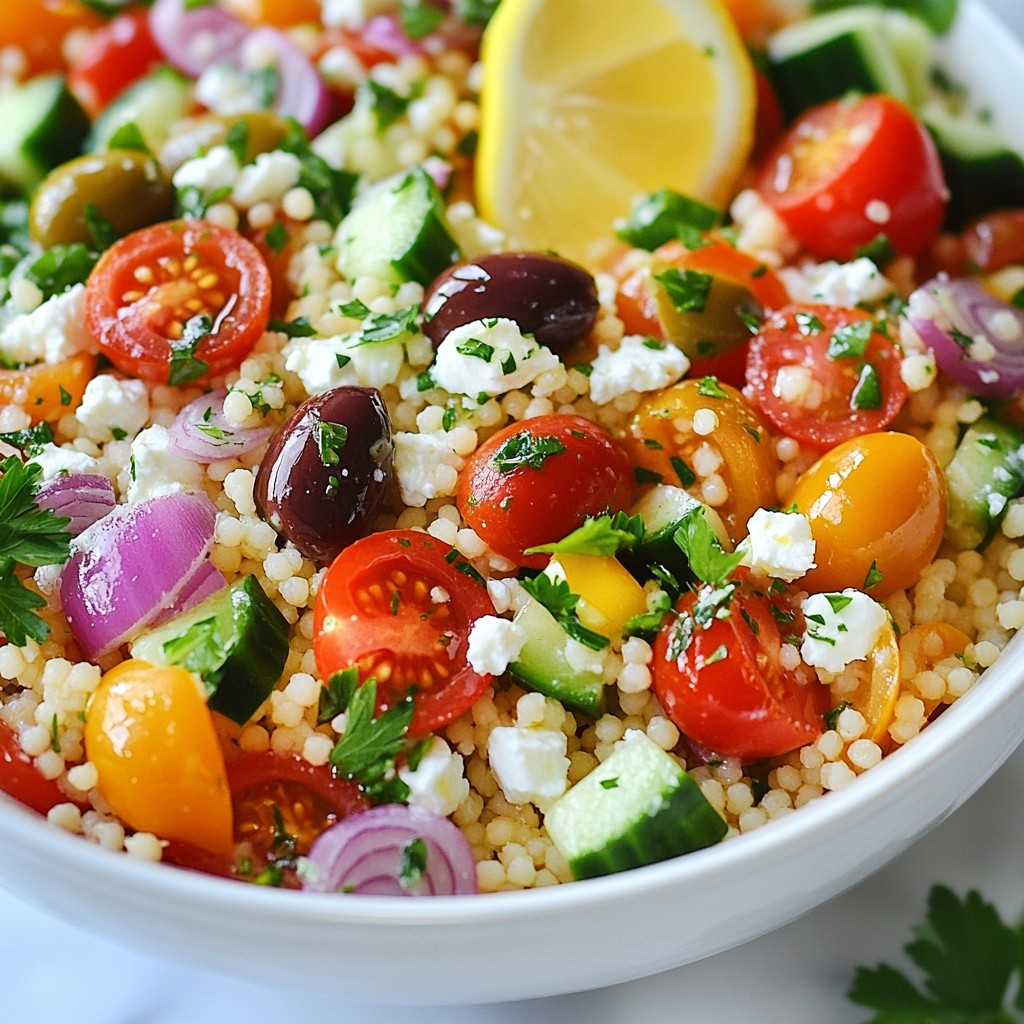
Get ready to savor a burst of flavors with my Mediterranean Couscous Salad! This dish combines fresh veggies and light couscous, making it perfect for any meal. Whether you’re hosting friends or enjoying a quiet dinner, this salad is easy to make. In this post, I’ll guide you through simple steps and share tips for extra taste. Let’s dive into this fresh, vibrant dish that everyone will love!
Why I Love This Recipe
- Nutritious and Wholesome: This Mediterranean Couscous Salad is packed with whole grains, fresh vegetables, and healthy fats, making it a nutritious option for any meal.
- Easy to Prepare: With a quick prep time and simple cooking steps, this salad comes together effortlessly, perfect for busy weeknights or potlucks.
- Versatile and Customizable: You can easily adapt this recipe by adding your favorite vegetables, proteins, or herbs, making it a flexible dish for all tastes.
- Flavorful and Refreshing: The combination of lemon, olives, and feta creates a delightful flavor profile that is both refreshing and satisfying on warm days.
Ingredients
List of Ingredients
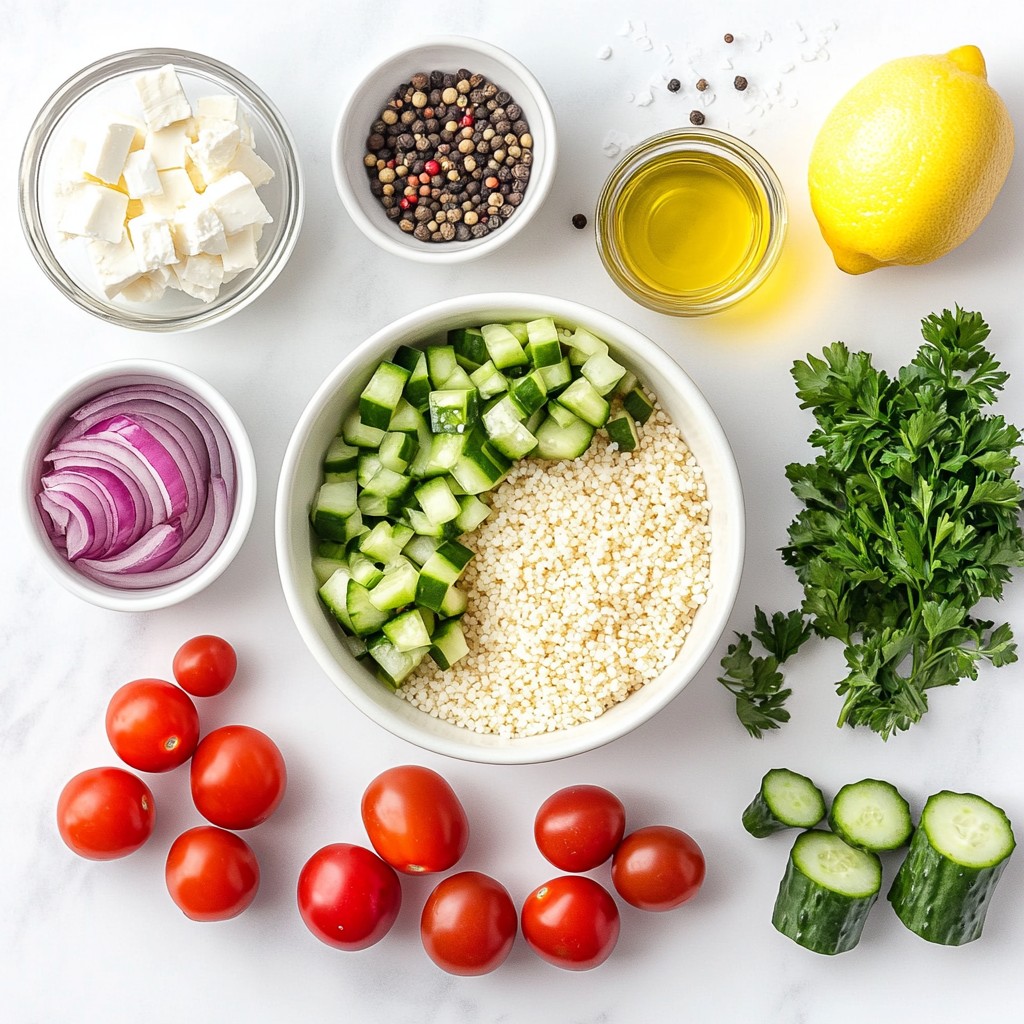
To make Mediterranean Couscous Salad, you need:
- 1 cup whole wheat couscous
- 1 1/4 cups vegetable broth
- 1 cup cherry tomatoes, halved
- 1/2 cucumber, diced
- 1/4 red onion, finely chopped
- 1/2 cup Kalamata olives, pitted and sliced
- 1/2 cup feta cheese, crumbled
- 1/4 cup fresh parsley, chopped
- 2 tablespoons olive oil
- 2 tablespoons lemon juice
- 1 teaspoon dried oregano
- Salt and pepper to taste
These ingredients create a fresh and colorful dish. The couscous serves as a great base. The veggies and cheese add flavor and texture.
Optional Ingredients for Extra Flavor
You can add some optional ingredients for more taste:
- Bell peppers, diced
- Artichoke hearts, chopped
- Avocado, diced
- Chickpeas, rinsed
- Fresh mint, chopped
These additions can enhance the dish. They also add more color and nutrition. You can mix and match based on your taste.
Equipment Needed for Preparation
Gather this equipment to make your salad easy to prepare:
- Medium saucepan
- Large mixing bowl
- Small bowl for dressing
- Fork for fluffing couscous
- Knife and cutting board for chopping
Having the right tools makes cooking smoother. You can easily prepare and combine all the tasty ingredients.
Step-by-Step Instructions
Cooking the Couscous
First, grab a medium saucepan. Pour in 1 1/4 cups of vegetable broth and bring it to a boil. Once it bubbles, add 1 cup of whole wheat couscous. Stir it in well, then remove the pot from heat. Cover it and let it sit for about 5 minutes. This allows the couscous to soak up the broth. When it’s ready, fluff it with a fork.
Preparing the Vegetable Mixture
While the couscous cooks, take a large bowl. Add 1 cup of halved cherry tomatoes, 1/2 diced cucumber, and 1/4 finely chopped red onion. Then, toss in 1/2 cup of pitted and sliced Kalamata olives. Crumble 1/2 cup of feta cheese into the bowl. Lastly, add 1/4 cup of chopped fresh parsley for a nice touch.
Combining and Tossing Ingredients
Now, you need a small bowl. In it, whisk together 2 tablespoons of olive oil, 2 tablespoons of lemon juice, 1 teaspoon of dried oregano, and some salt and pepper. Once mixed, pour this dressing over your vegetable mixture. Add the fluffed couscous next. Toss everything gently until it’s well combined. Taste it and adjust the seasoning if needed.
Serving Suggestions
You can serve this salad right away for a fresh bite. If you prefer, let it chill in the fridge for 30 minutes. This helps the flavors come together. For a beautiful presentation, serve it in a large bowl. Garnish with extra parsley and a slice of lemon on top. Enjoy the vibrant colors and tastes!
Tips & Tricks
How to Perfect the Couscous Texture
To get the best couscous texture, start with good broth. The broth brings out the flavor. Bring the broth to a boil first. Then, add the couscous and turn off the heat. Cover the pot and let it sit for five minutes. This helps the couscous absorb all the liquid. After five minutes, fluff it with a fork. This makes it light and fluffy. Avoid using a spoon, as it can make it mushy.
Best Practices for Flavors Combination
Combine fresh and vibrant ingredients for a great taste. Chopped cherry tomatoes add sweetness. Diced cucumber brings crunch. Red onion adds a nice bite. Kalamata olives give a salty kick. Feta cheese adds creaminess and tang. Don’t forget the fresh parsley; it brightens the dish. For the dressing, use olive oil and lemon juice. Mix in dried oregano, salt, and pepper. This combination enhances each flavor. Taste as you mix to adjust the flavors to your liking.
Serving & Presentation Tips
Serving the salad nicely makes a big difference. Use a large bowl for a colorful display. Garnish with extra parsley on top. A slice of lemon adds color and freshness. For a fun twist, add pita chips on the side. This adds texture and a crunchy element. If you let the salad sit for 30 minutes, the flavors blend better. Serve it chilled or at room temperature. Enjoying it fresh makes every bite delightful!
Pro Tips
- Use Fresh Ingredients: For the best flavor, opt for fresh vegetables and herbs. They can elevate the dish significantly.
- Customize Your Olives: Feel free to mix different types of olives for a more complex flavor profile.
- Chill for Enhanced Flavor: Allow the salad to chill in the refrigerator for at least 30 minutes before serving. This helps the flavors meld together beautifully.
- Experiment with Dressings: Try adding a splash of balsamic vinegar or a pinch of red chili flakes to the dressing for an extra kick.
Variations
Mediterranean Couscous Salad with Grilled Chicken
You can add grilled chicken to your Mediterranean couscous salad. Simply grill chicken breasts and slice them. Toss the chicken pieces in with the couscous and vegetables. This addition gives a hearty feel. Chicken also provides protein, making the dish more filling.
Adding Extra Vegetables
Feel free to add more veggies to your salad. Bell peppers, spinach, or zucchini work well. You can use roasted or fresh vegetables, depending on your taste. Adding extra vegetables boosts the vitamins and minerals in your dish. Plus, it adds color and crunch to your salad.
Vegetarian and Vegan Options
You can easily make this recipe vegetarian or vegan. Instead of feta cheese, use vegan cheese or skip it altogether. For protein, add chickpeas or black beans. They add a nice texture and taste. Use vegetable broth to keep it plant-based. Enjoy your salad while knowing it fits your diet!
Storage Info
Best Practices for Storing Leftovers
To keep your Mediterranean couscous salad fresh, store it in a sealed container. Glass or plastic work well. Make sure to remove any excess air before sealing. This simple step helps prevent dry spots and keeps flavors intact. Place it in the fridge right after serving to ensure it stays cool.
How Long Does It Last in the Fridge?
When stored properly, the salad lasts about three to five days in the fridge. If you notice changes in color or smell, it’s best to toss it. Always check before eating. Fresh herbs may wilt over time, but the flavor remains good for several days.
Freezing Couscous Salad
Freezing couscous salad is possible but not ideal. The texture of the vegetables and herbs may change. If you decide to freeze it, use an airtight container. It can last up to three months in the freezer. When ready to eat, thaw it in the fridge overnight. You may need to add a splash of olive oil or lemon juice to revive the flavors.
FAQs
Can I make Mediterranean Couscous Salad ahead of time?
Yes, you can make this salad ahead of time. It tastes even better after sitting. I recommend preparing it a few hours before you plan to serve it. Just cover it and store it in the fridge. This lets the flavors blend nicely.
What can I add to Mediterranean Couscous Salad for extra protein?
To boost protein, try adding grilled chicken or chickpeas. Both options work well. You can also use canned tuna or shrimp. These additions make the salad heartier and more filling.
Is couscous gluten-free?
No, couscous is not gluten-free. It comes from wheat, so it contains gluten. If you need a gluten-free option, use quinoa or rice instead. Both can mimic the couscous texture nicely.
Making Mediterranean Couscous Salad is easy and fun. We covered the key ingredients, equipment, and step-by-step instructions. You learned how to cook couscous, prepare fresh veggies, and serve it well. I shared tips for perfect texture and great flavor. You can even try fun variations, like adding grilled chicken. Remember, storing leftovers can keep your salad fresh. With this knowledge, you can make a delicious meal anytime. Enjoy your culinary adventures with couscous salad!